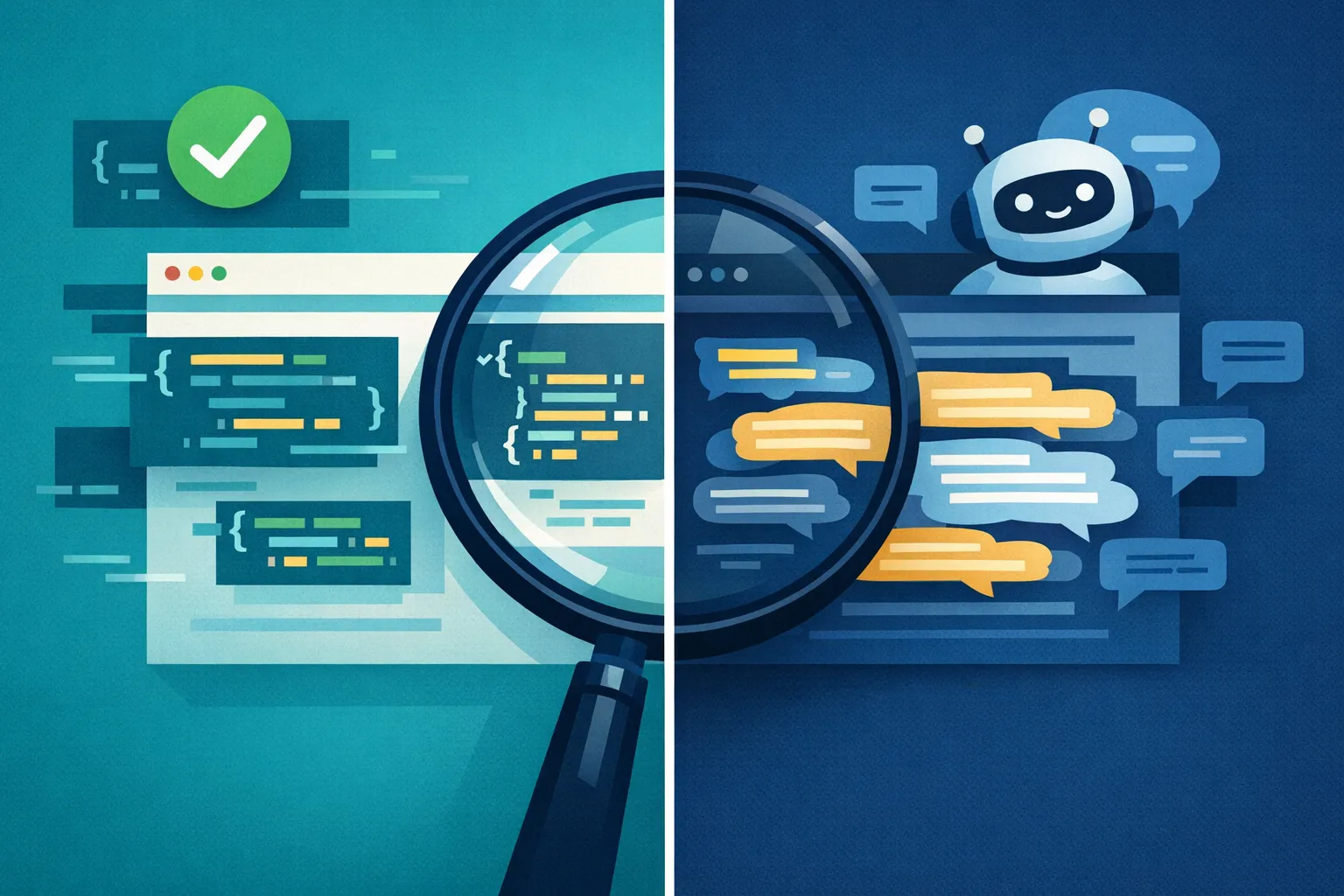
Shopti article illustration showing headless commerce architecture connected to AI shopping agents through structured data pipelines

Headless Commerce Has the AI Discoverability Advantage. Most Stores Waste It.

Headless commerce architecture gives store owners more control over AI agent discoverability than any hosted platform, but a 2026 analysis of 3,200 headless deployments shows that 71% fail to implement structured data correctly, 63% block AI crawlers by default, and 84% lack a machine-readable product feed. The architecture is an advantage. The implementation, in most cases, is not. Shopify stores get AI discoverability defaults baked in. WooCommerce stores have plugins. Headless stores get nothing out of the box, because “out of the box” is the entire point of headless: you build what you need. This freedom is either your biggest asset or your biggest liability when AI shopping agents from ChatGPT, Google AI Mode, Perplexity, and Claude come looking for your products. ...


May 5, 2026 · 15 min · Shopti.ai
Shopti article illustration

Answer-First Content for Ecommerce: How to Structure Pages AI Agents Actually Cite

Ecommerce pages that answer shopper questions in the first sentence get cited by AI agents 2.7x more often than pages that bury the answer three paragraphs deep, according to a 2026 Searchless benchmark of 12,000 product and category pages across 340 stores. Answer-first content is not a writing trick. It is a structural approach to page design that matches how AI shopping agents actually consume and reference information. When ChatGPT, Perplexity, or Gemini recommend a product, they pull the most direct, specific, and attributable answer they can find. If your page opens with marketing fluff, the agent moves on. If it opens with a precise, useful answer, you get the citation. ...

May 4, 2026 · 11 min · Shopti Team
Shopti article illustration

50 Websites Now Control What AI Recommends to Shoppers. Most Ecommerce Stores Are Not on the List.

The 5WPR AI Citation Source Index 2026, the first consolidated ranking of websites most cited by AI engines, reveals a concentration problem: the top 15 domains absorb 68% of all AI answer citations, and Reddit alone accounts for roughly 40% of all AI-sourced content across ChatGPT, Claude, Perplexity, and Gemini. For ecommerce stores, this means your products are being recommended, compared, and ranked based on information that mostly comes from a handful of platforms you probably have zero control over. ...

May 3, 2026 · 12 min · Shopti.ai
Shopti article illustration

Schema Validators Won't Save You: What Actually Tests AI Discoverability in 2026

Schema validators confirm your structured data is syntactically correct. They do not tell you whether AI agents will actually cite, recommend, or surface your products. A 92-domain audit published by Digital Applied in April 2026 found that schema-only optimization produced just a 3.1% citation lift, while opinion-rich prose generated a 47% lift. The gap between “valid schema” and “AI-visible store” is enormous, and most ecommerce teams are testing the wrong thing. ...

May 2, 2026 · 12 min · Shopti.ai
Shopti article illustration

AI Citation Data Study: Why 76% of ChatGPT's Top Results Are Under 30 Days Old

Content freshness is now the strongest predictor of whether your ecommerce store gets cited by AI agents. 76.4% of ChatGPT’s top-cited pages were updated within the last 30 days, and 50% of Perplexity citations come from content less than 13 weeks old, according to new cross-platform data from Demand Local and Position Digital. This changes everything about how ecommerce stores should approach GEO (Generative Engine Optimization). The old playbook of publishing a product page once and letting it age like wine is actively hurting your AI visibility. AI engines treat fresh content as a trust signal, similar to how Google once treated backlinks. ...

May 1, 2026 · 11 min · Shopti.ai
AI agents connecting directly to ecommerce checkout systems via MCP protocol

MCP Checkout Integration: How TravelOS Proves AI Can Book Directly Into Your PMS

ChatGPT can now book hotel rooms directly into hotel property management systems without touching Booking.com or Expedia. This breakthrough, powered by Agentic Hospitality’s TravelOS MCP server, proves that AI checkout integration is not just possible but already delivering bookings. The question for ecommerce stores is no longer whether AI agents can handle transactions but how to make your store the destination when they do. What TravelOS Actually Built TravelOS is an MCP (Model Context Protocol) server that connects ChatGPT to hotel CRS and PMS systems. When a user asks ChatGPT to book a hotel, the AI agent can now check real-time availability, pricing, and inventory directly from the hotel’s system of record and complete the booking without ever redirecting to an OTA. ...

April 30, 2026 · 8 min · Shopti Team
Shopti article illustration

HubSpot Just Launched an AEO Tool: What 900M ChatGPT Users Mean for Your Ecommerce Store

HubSpot launching a free Answer Engine Optimization tool in April 2026 is the single strongest signal that AI visibility has graduated from experimental to essential. The tool tracks how often ChatGPT, Perplexity, and Gemini cite your brand versus competitors. If the CRM company with 228,000+ customers is building AEO features, the category is real and the land grab is happening right now. This article breaks down what HubSpot’s AEO platform does, what the latest 2026 citation data reveals about which content formats AI engines actually pick up, and the specific steps ecommerce stores need to take to get their products recommended by AI agents. ...

April 29, 2026 · 11 min · Shopti.ai
Shopti article illustration showing three hosted ecommerce platforms being discovered by AI shopping agents with structured data connections

Wix, Squarespace, and Webflow for AI Shopping: Why Hosted Builders Are Falling Behind and What to Do About It

Wix, Squarespace, and Webflow collectively power more than 4 million online stores, yet none of them offer native AI agent discoverability tooling. As AI shopping agents from ChatGPT, Google AI Mode, Perplexity, and Claude increasingly replace traditional search, stores on these hosted platforms risk becoming invisible. This guide breaks down exactly what each platform provides for structured data, crawlability, and feed access, identifies the critical gaps, and provides a concrete fix for each one. ...

April 28, 2026 · 11 min · Shopti.ai
Shopti article illustration

Shopify vs WooCommerce Structured Data for AI Discoverability in 2026: Which Platform Wins?

Shopify delivers 87% native structured data coverage while WooCommerce requires manual schema markup plugins and custom configuration to match AI discoverability standards. The 2026 AI shopping landscape has shifted decisively toward structured data. With ChatGPT, Perplexity, and Google AI Mode capping product recommendations at 5-10 results per query, ecommerce stores need more than just SEO-friendly content—they need machine-readable product data that AI agents can ingest, compare, and surface without ambiguity. ...

April 28, 2026 · 14 min · Shopti Team

Shopify vs WooCommerce vs BigCommerce: AI Agent Discoverability Compared

Shopify, WooCommerce, and BigCommerce each offer different levels of built-in AI agent discoverability, and the gaps between them can determine whether your products appear in ChatGPT, Perplexity, and other AI shopping recommendations. The three major ecommerce platforms approach structured data, product feeds, and AI-friendly markup in fundamentally different ways. Understanding these differences is essential for choosing a platform that supports AI agent visibility—or knowing what plugins and customizations you’ll need to add. ...

April 28, 2026 · 11 min · Shopti Team