MCP Server Security for Ecommerce: OAuth 2.1, Token Scopes, and Stopping Rogue Agents

Every ecommerce store that exposes an MCP server to AI shopping agents is also exposing a potential attack surface. The Model Context Protocol specification, updated to version 2025-06-18 in June 2025, now mandates OAuth 2.1 authorization with scoped access tokens for any HTTP-based MCP server. That means if your store runs an MCP server without proper authentication, you are not just non-compliant with the spec. You are letting any AI agent that discovers your endpoint query your product catalog, read inventory levels, and potentially initiate checkout flows with no identity verification. ...

June 11, 2026 · 15 min · Shopti Team
Shopti article illustration

AI Agent Regulation Is Coming for Ecommerce: What the EU AI Act, DSA, and Emerging US Laws Mean for Your Store

AI shopping agents that recommend, compare, and buy products on behalf of consumers are now subject to three overlapping regulatory frameworks in 2026: the EU AI Act transparency obligations (effective August 2025), the Digital Services Act (fully enforced since early 2025), and a patchwork of US state-level AI commerce laws. Ecommerce stores that serve EU customers or work with AI agent platforms must understand these rules, because non-compliance penalties range up to 3% of global annual turnover under the AI Act alone. ...

June 7, 2026 · 12 min · Shopti Team
Shopti article illustration

Agentic Commerce Readiness Gap 2026: What Ecommerce Stores Must Fix Before AI Agents Buy for Customers

Three-quarters of enterprise leaders say they are adopting agentic AI. Only a small fraction have it running in meaningful production. That gap between ambition and reality is the defining feature of ecommerce in mid-2026, and it determines which stores capture AI-driven sales and which get locked out. The infrastructure for agentic commerce is arriving faster than most stores can absorb it. Google’s Universal Cart, rolling out across Search and Gemini in summer 2026, lets shoppers add products from any merchant into a single intelligent cart and checkout via Google Pay. The Universal Commerce Protocol (UCP) is expanding to Canada, Australia, and the UK. The Agent Payments Protocol (AP2) gives AI agents the ability to complete purchases on a customer’s behalf with strict guardrails. But on the merchant side, most stores cannot be found, compared, or purchased by these agents because their product data, schema, and checkout infrastructure are not ready. ...

June 5, 2026 · 11 min · Shopti.ai
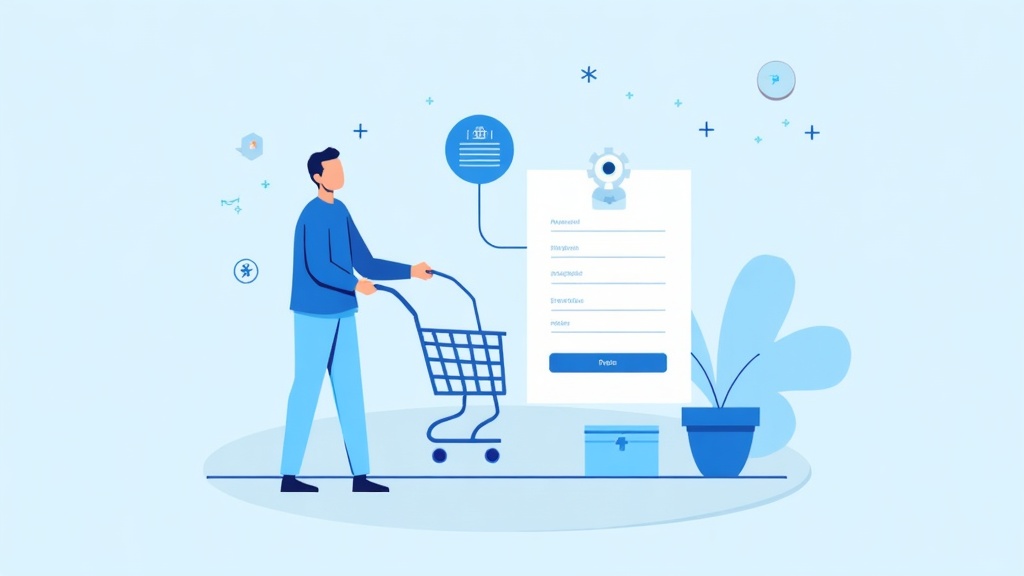
AI checkout integration flow showing how ecommerce agents hand off shoppers to complete purchases

AI Checkout Integration Guide for Ecommerce Stores

Ecommerce AI checkout integration happens when AI shopping agents either hand off shoppers to your store’s checkout page or complete purchases directly through payment APIs. Without checkout URLs, structured payment data, or MCP server connections, agents cannot finalize the transaction for your products. AI shopping agents like ChatGPT, Perplexity, and Google’s AI Overviews now surface products and compare options, but checkout integration remains the critical missing link for conversion. When an agent recommends your product but cannot complete the purchase, the shopper must manually navigate to your store, creating friction that increases abandonment rates. ...

June 4, 2026 · 7 min · Shopti.ai
Shopti article illustration

5 AI Shopping Agent Trends Reshaping Ecommerce in Mid-2026: What the Data Shows

AI shopping agents now influence roughly one in three online purchase decisions in 2026, up from roughly one in ten at the start of 2025. That acceleration, driven by ChatGPT Shopping, Google AI Mode, and Amazon Rufus, is reshaping which stores get found, compared, and purchased from. For ecommerce teams, the mid-2026 landscape looks nothing like the search-driven world of even two years ago. Here are the five defining trends, backed by data, and what your store must do about each. ...

May 31, 2026 · 10 min · Shopti.ai
Shopti article illustration

The Agentic Commerce Stack in 2026: What Every Ecommerce Store Needs to Accept AI-Driven Purchases

Most ecommerce stores cannot be purchased by AI agents because they are missing at least two layers of the agentic commerce stack: a machine-readable product data layer and a programmatic checkout interface. This is not a future problem. Stripe launched its official MCP server in early 2026 with OAuth support, OpenAI integrated browser-based purchasing directly into ChatGPT via its Computer-Using Agent, and Google AI Mode is surfacing direct product offers. Stores that build the full stack now will capture the first wave of agentic commerce revenue. ...

May 28, 2026 · 12 min · Shopti Team
Shopti article illustration

The AI Shopping Platform Consolidation: Why Google, Amazon, and OpenAI Will Control 80% of AI-Assisted Ecommerce by 2027

Three companies are building the infrastructure that will determine which ecommerce stores survive the transition to AI-assisted shopping. Google, Amazon, and OpenAI now sit between the shopper and the store, and their platforms are consolidating fast enough that by late 2027, independent ecommerce will face the same gatekeeper dynamic that mobile app developers faced after iOS and Android consolidated the smartphone market. This is not speculation. The data from the first half of 2026 shows the consolidation accelerating across three vectors: search intent, product discovery, and transaction completion. ...

May 24, 2026 · 13 min · Shopti Team
Shopti article illustration

Agentic Payments Are Live: Is Your Ecommerce Store Ready to Be Purchased by AI?

AI agents can now buy products from your store without a human ever visiting your website. In April and May 2025, Visa, Mastercard, and PayPal each launched agentic payment platforms within weeks of each other, and Perplexity became the first AI search engine to complete end-to-end purchases through PayPal’s checkout. If your ecommerce store is not structured for AI agents to discover, evaluate, and purchase your products, you are already losing sales to competitors who are. ...

May 14, 2026 · 11 min · Shopti Team
Shopti article illustration

AI Search Just Split Into 5 Platforms. Here Is What Your Ecommerce Store Needs to Do About It.

AI search is no longer one platform. Between GPT-5.5, DeepSeek V4, Claude with 15 consumer app integrations, and Perplexity crossing $450M ARR, your ecommerce store now needs to be visible across at least five distinct AI ecosystems, each with different crawling behavior, citation patterns, and product recommendation logic. For the past two years, most stores treated AI search as a single channel. Optimize for ChatGPT, the thinking went, and you are covered. That strategy is now dead. The AI search landscape has fragmented faster than anyone predicted, and stores that do not adapt will lose a growing slice of traffic that no traditional SEO tool can measure. ...

April 26, 2026 · 11 min · Shopti.ai
Shopti article illustration

The AI Shopping Market in 2026: What Changed, What's Coming, and What Your Store Must Do Now

The AI shopping market crossed a point of no return in early 2026. ChatGPT reached 900 million weekly active users, Google began restructuring its entire advertising business around AI-generated answers, and the EU AI Act entered its enforcement phase. For ecommerce stores, the question is no longer whether AI agents will influence purchase decisions. The question is whether your store will be visible when they do. This article breaks down the five biggest shifts in AI-powered shopping so far in 2026, what the data says about where consumer behavior is heading, and the specific actions ecommerce teams should take right now to stay discoverable. ...

April 19, 2026 · 10 min · Shopti.ai