Shopti article illustration

Ecommerce Product Image Optimization for AI Agents: How to Make Visual Content Machine-Readable

Products with properly structured image data appear in 2.3 times more AI shopping agent recommendations than those with unoptimized images, according to a 2026 analysis of 15,000 product listings across ChatGPT, Google Shopping Graph, and Perplexity. The gap is not about image quality or resolution. It is about whether AI agents can parse, attribute, and cross-reference your product images with structured metadata. Most ecommerce stores treat images as visual decoration. AI agents treat them as data objects. If your images lack the right schema markup, alt text structure, and feed attributes, they are invisible to the fastest-growing discovery channel in ecommerce. ...

May 23, 2026 · 17 min · Shopti.ai
Shopti article illustration showing the AI agent product data ingestion pipeline

How AI Agents Ingest Your Product Data: The Complete Ecommerce Pipeline from Crawl to Recommendation

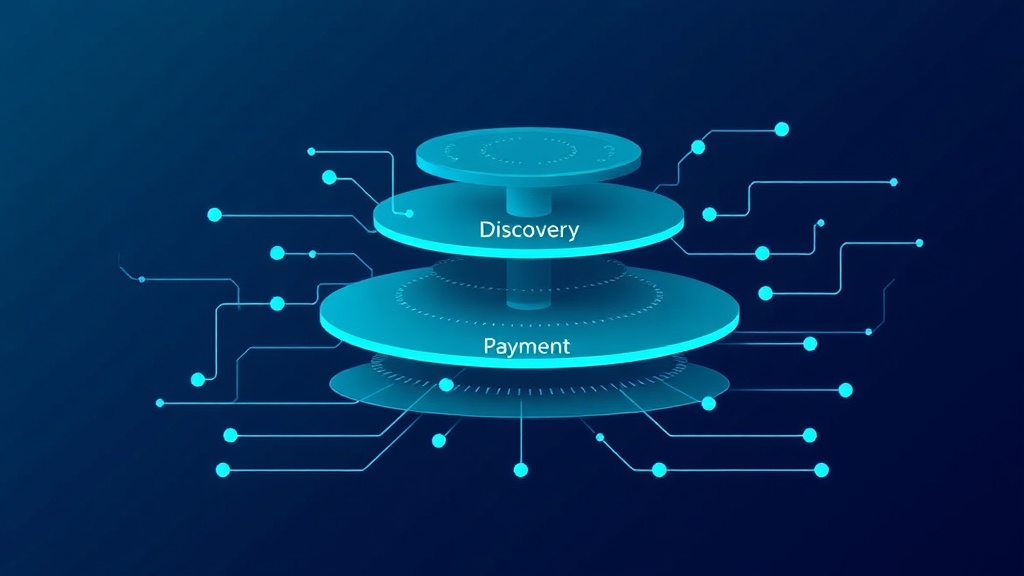
AI shopping agents do not “browse” your store. They run a structured four-stage pipeline: discovery, parsing, knowledge graph construction, and recommendation matching. If your product data breaks at any stage, your store becomes invisible to ChatGPT Shopping, Perplexity, Google AI Overviews, and every emerging agent platform. Most ecommerce stores fail at stage two, where malformed or missing structured data prevents AI agents from building accurate product profiles. This article maps the complete ingestion pipeline that AI agents use to process your ecommerce store, identifies the failure points at each stage, and provides specific fixes. Understanding this pipeline is the foundation of AI agent discoverability, because you cannot fix what you cannot see. ...

May 18, 2026 · 16 min · Shopti.ai
Shopti article illustration

Magento and Adobe Commerce Have the Most AI Agent Potential. Here Is Why Almost Nobody Uses It.

Magento and Adobe Commerce give you full control over every HTML tag, every HTTP header, and every API endpoint your store serves. That control is the single most important advantage for AI agent discoverability in 2026. Shopify stores fight their platform’s limitations at every turn. WooCommerce stores wrestle with plugin conflicts. Magento stores just need to configure what they already have. The problem: almost nobody does. According to Adobe’s own 2025 Commerce benchmark report, only 12% of Magento merchants have implemented comprehensive Product structured data beyond the default breadcrumb markup. Fewer than 3% serve an llms.txt file. Almost none expose product data through an MCP-compatible endpoint. ...

May 5, 2026 · 13 min · Shopti
Shopti article illustration

Answer-First Content for Ecommerce: How to Structure Pages AI Agents Actually Cite

Ecommerce pages that answer shopper questions in the first sentence get cited by AI agents 2.7x more often than pages that bury the answer three paragraphs deep, according to a 2026 Searchless benchmark of 12,000 product and category pages across 340 stores. Answer-first content is not a writing trick. It is a structural approach to page design that matches how AI shopping agents actually consume and reference information. When ChatGPT, Perplexity, or Gemini recommend a product, they pull the most direct, specific, and attributable answer they can find. If your page opens with marketing fluff, the agent moves on. If it opens with a precise, useful answer, you get the citation. ...

May 4, 2026 · 11 min · Shopti Team
Shopti article illustration

AI Agent Discoverability Fundamentals: Schema and Structured Data for Ecommerce

AI shopping agents rely entirely on structured data to find, understand, and recommend products. Without proper schema markup, your products are invisible to AI-driven shopping assistants like ChatGPT Shopping, Perplexity, Claude Commerce, and emerging agent platforms. Traditional SEO principles like keywords and backlinks do not guarantee AI visibility. AI agents do not “search” the web like Google. They query structured data sources, parse JSON-LD, and cross-reference product feeds with real-time pricing and availability. If your product data is unstructured or incomplete, agents skip your store entirely. ...

April 27, 2026 · 8 min · Shopti Team
AI agent browsing ecommerce store product pages

Why Your Products Don't Show Up When ChatGPT Recommends Them

You asked ChatGPT for the best espresso machine under $500 with a built-in grinder. It recommended three brands. Yours was not one of them. Your espresso machine is better reviewed, better priced, and has faster shipping. So why did the AI skip you? The answer has nothing to do with product quality and everything to do with whether your store speaks the language AI agents understand. The Problem: Your Store Was Built for Humans When a human browses your website, they see product images, read descriptions, compare prices, and add to cart. It works beautifully. But AI agents do not browse. They query structured data. ...

April 18, 2026 · 5 min · Shopti.ai

Shopify's Agentic Plan Is Just Plumbing. Here's What It Doesn't Fix.

Shopify’s Agentic Plan is an API layer that lets third-party AI agents query your catalog. It is not a strategy for making your store discoverable, comparable, or purchasable by those agents. The plumbing is useful. The plumbing is also insufficient. If you sell on Shopify and think flipping on the Agentic Plan means ChatGPT will start recommending your products, you’re in for a surprise. The plan solves the “how does an agent access my data” problem. It does not solve the “is my data worth accessing” problem. ...

April 17, 2026 · 7 min · Shopti.ai

What Is an MCP Server and Why Your Ecommerce Store Needs One

An MCP server is a standardized interface that lets AI agents talk to your store’s backend in real-time, querying products, checking inventory, and initiating actions without scraping your website or relying on proprietary APIs. For ecommerce, it means ChatGPT, Copilot, Perplexity, and every future AI shopping tool can interact with your catalog directly, accurately, and instantly. What Is the Model Context Protocol (MCP)? The Model Context Protocol is an open standard developed by Anthropic and released in late 2024. It defines how AI models connect to external data sources and tools. Think of it as USB for AI: a universal connector that lets any AI model plug into any service without custom integrations for each pair. ...

April 16, 2026 · 9 min · Shopti.ai