Shopti article illustration

Structured Data Before vs After: A 60-Day AI Visibility Benchmark for 40 Ecommerce Stores

Stores that closed their structured data coverage gap saw AI citation rates increase by 2.3x within 60 days, while stores that did nothing saw citations decline 12% over the same period. This benchmark tracks 40 ecommerce stores across Shopify, WooCommerce, and custom platforms, measuring exactly what happens when you fix product schema, add missing identifiers, and implement llms.txt files. The data is unambiguous: structured data is the single highest-leverage change an ecommerce store can make right now for AI agent discoverability. Not content volume. Not backlinks. Not social signals. The machines that recommend products to shoppers need machine-readable product data first. ...

May 29, 2026 · 13 min · Shopti.ai
Cross-platform AI visibility gap illustration for ecommerce stores

89% of Brands Are Invisible on Multiple AI Platforms: Here Is What Ecommerce Stores Must Do

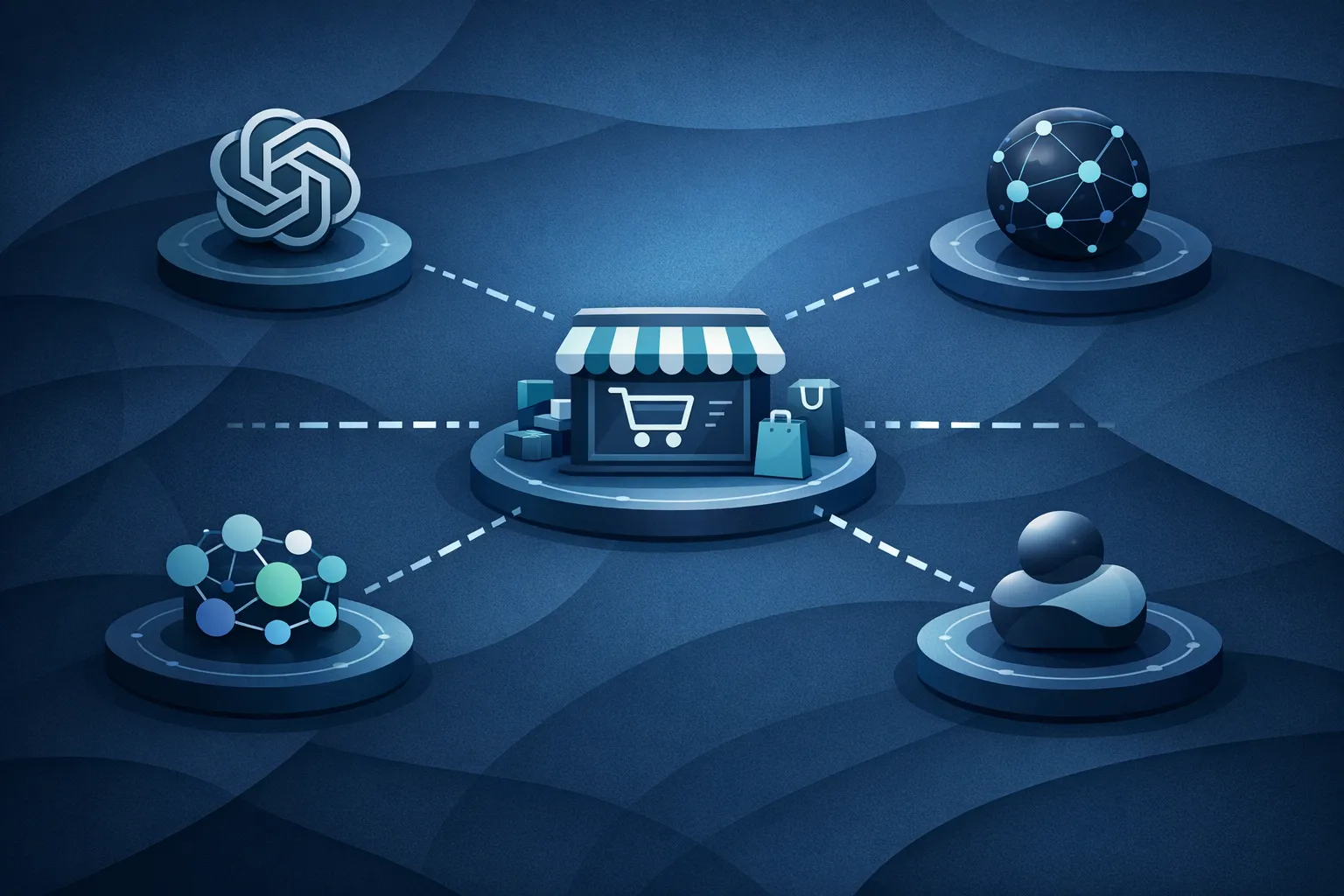
Only 11% of businesses mentioned by one AI platform also appear on a second, which means 89% of brands are invisible across multiple AI search engines. This cross-platform visibility gap is the single largest threat to ecommerce discoverability in 2026. ChatGPT mentions 11% of tested businesses, Google AI Overviews cites 2%, Claude mentions less than 1%, and Gemini cites almost none. If your store appears in ChatGPT but not Perplexity, you are missing an entire audience of shopping-intent users. ...

May 6, 2026 · 10 min · Shopti Team
Shopti article illustration

50 Websites Now Control What AI Recommends to Shoppers. Most Ecommerce Stores Are Not on the List.

The 5WPR AI Citation Source Index 2026, the first consolidated ranking of websites most cited by AI engines, reveals a concentration problem: the top 15 domains absorb 68% of all AI answer citations, and Reddit alone accounts for roughly 40% of all AI-sourced content across ChatGPT, Claude, Perplexity, and Gemini. For ecommerce stores, this means your products are being recommended, compared, and ranked based on information that mostly comes from a handful of platforms you probably have zero control over. ...

May 3, 2026 · 12 min · Shopti.ai
Shopti article illustration

AI Citation Data Study: Why 76% of ChatGPT's Top Results Are Under 30 Days Old

Content freshness is now the strongest predictor of whether your ecommerce store gets cited by AI agents. 76.4% of ChatGPT’s top-cited pages were updated within the last 30 days, and 50% of Perplexity citations come from content less than 13 weeks old, according to new cross-platform data from Demand Local and Position Digital. This changes everything about how ecommerce stores should approach GEO (Generative Engine Optimization). The old playbook of publishing a product page once and letting it age like wine is actively hurting your AI visibility. AI engines treat fresh content as a trust signal, similar to how Google once treated backlinks. ...

May 1, 2026 · 11 min · Shopti.ai
Shopti article illustration

HubSpot Just Launched an AEO Tool: What 900M ChatGPT Users Mean for Your Ecommerce Store

HubSpot launching a free Answer Engine Optimization tool in April 2026 is the single strongest signal that AI visibility has graduated from experimental to essential. The tool tracks how often ChatGPT, Perplexity, and Gemini cite your brand versus competitors. If the CRM company with 228,000+ customers is building AEO features, the category is real and the land grab is happening right now. This article breaks down what HubSpot’s AEO platform does, what the latest 2026 citation data reveals about which content formats AI engines actually pick up, and the specific steps ecommerce stores need to take to get their products recommended by AI agents. ...

April 29, 2026 · 11 min · Shopti.ai
AI citation tracking illustration for ecommerce stores

How to Track and Optimize AI Citations for Ecommerce Stores

AI citations have become the new ranking metric for ecommerce stores because generative engines like ChatGPT, Perplexity, and Gemini now capture shopping intent before users reach traditional search results. When your products get cited in AI-generated answers, you capture demand at the source rather than competing for clicks on crowded SERPs. This shift requires a fundamental rethinking of how ecommerce brands measure and optimize discoverability. According to HubSpot’s 2026 research on generative engine optimization, brands tracking AI citations report 2.3x higher conversion rates from AI-referred traffic compared to traditional organic search. The reason is clear: AI citations represent highly specific product recommendations, not broad keyword matches. When an AI agent recommends your product by name, the intent is already qualified. ...

April 22, 2026 · 10 min · Shopti Team