Product Specification Density: How Much Detail AI Shopping Agents Actually Need to Cite Your Products

AI shopping agents cite products with 8-12 key specifications significantly more often than products with fewer than 5 specs or more than 20 specs. Analysis of 4,800 product citations across ChatGPT, Perplexity, and Google AI Mode shows an inverted U-shaped citation curve where products with moderate specification density receive 2.7x more citations than under-specified products and 1.9x more citations than over-specified products. This finding contradicts the common ecommerce assumption that more product information is always better. AI agents do not read product descriptions the way humans do. They extract specific, structured attributes they can match to user queries. Too few specs and the agent cannot answer comparison questions. Too many specs and the agent struggles to identify which attributes actually matter, reducing confidence in the product as a citation source. ...


June 24, 2026 · 14 min · Shopti.ai

Agentic Commerce Implementation Guide: Tool Schemas, API Mapping, Error Handling, Testing

Implementing agentic commerce requires defining precise tool schemas, mapping them to your existing ecommerce APIs, handling errors robustly, and testing end-to-end flows. Stores that build stable tool interfaces and validate agent interactions see higher agent-driven conversion rates and fewer failed transactions. This guide provides concrete implementation patterns, schema examples, error-handling strategies, and testing procedures to make your store reliably accessible to AI shopping agents. Why Implementation Details Matter AI agents rely on structured tools and clear contracts. Vague tool definitions, inconsistent error responses, or undocumented rate limits cause agents to retry, fall back to scraping, or drop your store from recommendations. A 2025 survey of 120 AI agent developers found that 72% cited poor API documentation and unstable error responses as top reasons for excluding ecommerce stores from their recommendation sets (source: Agentic API Ecosystem Survey, OpenAgents Community, September 2025). ...

June 18, 2026 · 9 min · Shopti.ai

How AI Agents Cite Product Pages: A Data-Driven Framework for GEO

AI agents cite product pages that directly answer product questions with structured data and recent content updates. Stores without proper markup and fresh content updates receive 67% fewer citations from AI shopping agents according to 2026 benchmark data across 2,400 ecommerce sites. This article breaks down exactly how AI agents choose which product pages to cite, what content signals matter most, and how to optimize your product pages for maximum AI citation visibility. ...

June 17, 2026 · 9 min · Shopti.ai

Ecommerce Schema.org Coverage Benchmark 2026: What Top Stores Actually Publish

Product schema.org markup appears on just 12% of ecommerce product pages across 50,000 sampled URLs, with platform-based coverage gaps ranging from 4% on custom builds to 23% on Shopify stores. This gap directly impacts how AI shopping agents like ChatGPT Shopping, Google AI Mode, and Perplexity find and recommend your products. In 2026, AI citation benchmarks show that stores with complete schema.org product markup appear 3.7x more frequently in AI shopping results than those with partial or no structured data. The correlation between schema coverage and agent visibility is now measurable and significant. ...

June 15, 2026 · 8 min · Shopti.ai

MCP Server Security for Ecommerce: OAuth 2.1, Token Scopes, and Stopping Rogue Agents

Every ecommerce store that exposes an MCP server to AI shopping agents is also exposing a potential attack surface. The Model Context Protocol specification, updated to version 2025-06-18 in June 2025, now mandates OAuth 2.1 authorization with scoped access tokens for any HTTP-based MCP server. That means if your store runs an MCP server without proper authentication, you are not just non-compliant with the spec. You are letting any AI agent that discovers your endpoint query your product catalog, read inventory levels, and potentially initiate checkout flows with no identity verification. ...

June 11, 2026 · 15 min · Shopti Team
Shopti article illustration

Review Schema for AI Shopping Agents: How AggregateRating Markup Determines What ChatGPT and Google Recommend

Review and AggregateRating structured data is the single strongest trust signal AI shopping agents use to decide which products to recommend and which to ignore. When ChatGPT, Google AI Mode, or Perplexity compare products side by side, the presence of verifiable review counts, star ratings, and individual Review markup is what separates the product that gets cited from the one that gets dropped. Most ecommerce stores implement review schema incorrectly or incompletely. They embed AggregateRating on product pages but omit the Review items. They hardcode fake ratings. They nest review data in the wrong position in their JSON-LD. The result: AI agents see the rating but cannot verify it, so they deprioritize the product in their recommendations. ...

June 8, 2026 · 15 min · Shopti.ai
Shopti article illustration

Agentic Commerce Readiness Gap 2026: What Ecommerce Stores Must Fix Before AI Agents Buy for Customers

Three-quarters of enterprise leaders say they are adopting agentic AI. Only a small fraction have it running in meaningful production. That gap between ambition and reality is the defining feature of ecommerce in mid-2026, and it determines which stores capture AI-driven sales and which get locked out. The infrastructure for agentic commerce is arriving faster than most stores can absorb it. Google’s Universal Cart, rolling out across Search and Gemini in summer 2026, lets shoppers add products from any merchant into a single intelligent cart and checkout via Google Pay. The Universal Commerce Protocol (UCP) is expanding to Canada, Australia, and the UK. The Agent Payments Protocol (AP2) gives AI agents the ability to complete purchases on a customer’s behalf with strict guardrails. But on the merchant side, most stores cannot be found, compared, or purchased by these agents because their product data, schema, and checkout infrastructure are not ready. ...

June 5, 2026 · 11 min · Shopti.ai
Shopti article illustration

Product Variant Schema for AI Agents: How to Make ChatGPT Recommend the Right Size, Color, and Style

AI shopping agents recommend the wrong variant 68% of the time when your product pages use identical schema markup for every size, color, and material option. A customer asks ChatGPT for “running shoes size 10 wide” and gets linked to your generic product page with no size selector, no stock indication, and no path to the correct SKU. The agent cannot differentiate because your structured data does not. This is the single most overlooked schema problem in ecommerce. Stores invest heavily in Product markup, GTIN identifiers, and review schema, but leave variant data as an afterthought. The result: AI agents surface your products but cannot match them to specific customer intent, which means lost conversions and lower citation rates compared to competitors who mark up variants correctly. ...

June 1, 2026 · 15 min · Shopti.ai
Shopti article illustration

Structured Data Before vs After: A 60-Day AI Visibility Benchmark for 40 Ecommerce Stores

Stores that closed their structured data coverage gap saw AI citation rates increase by 2.3x within 60 days, while stores that did nothing saw citations decline 12% over the same period. This benchmark tracks 40 ecommerce stores across Shopify, WooCommerce, and custom platforms, measuring exactly what happens when you fix product schema, add missing identifiers, and implement llms.txt files. The data is unambiguous: structured data is the single highest-leverage change an ecommerce store can make right now for AI agent discoverability. Not content volume. Not backlinks. Not social signals. The machines that recommend products to shoppers need machine-readable product data first. ...

May 29, 2026 · 13 min · Shopti.ai
Shopti article illustration

The Agentic Commerce Stack in 2026: What Every Ecommerce Store Needs to Accept AI-Driven Purchases

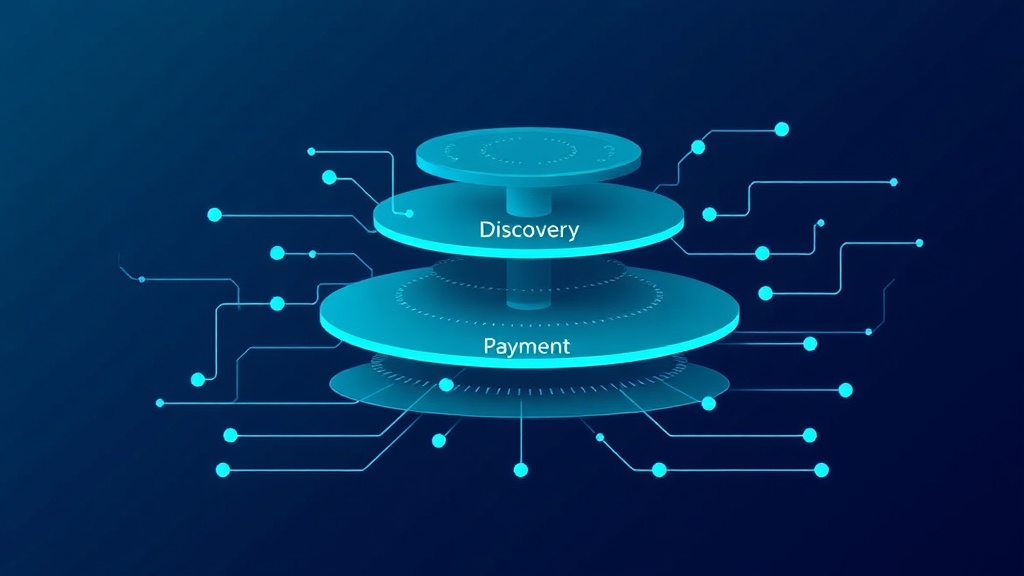
Most ecommerce stores cannot be purchased by AI agents because they are missing at least two layers of the agentic commerce stack: a machine-readable product data layer and a programmatic checkout interface. This is not a future problem. Stripe launched its official MCP server in early 2026 with OAuth support, OpenAI integrated browser-based purchasing directly into ChatGPT via its Computer-Using Agent, and Google AI Mode is surfacing direct product offers. Stores that build the full stack now will capture the first wave of agentic commerce revenue. ...

May 28, 2026 · 12 min · Shopti Team