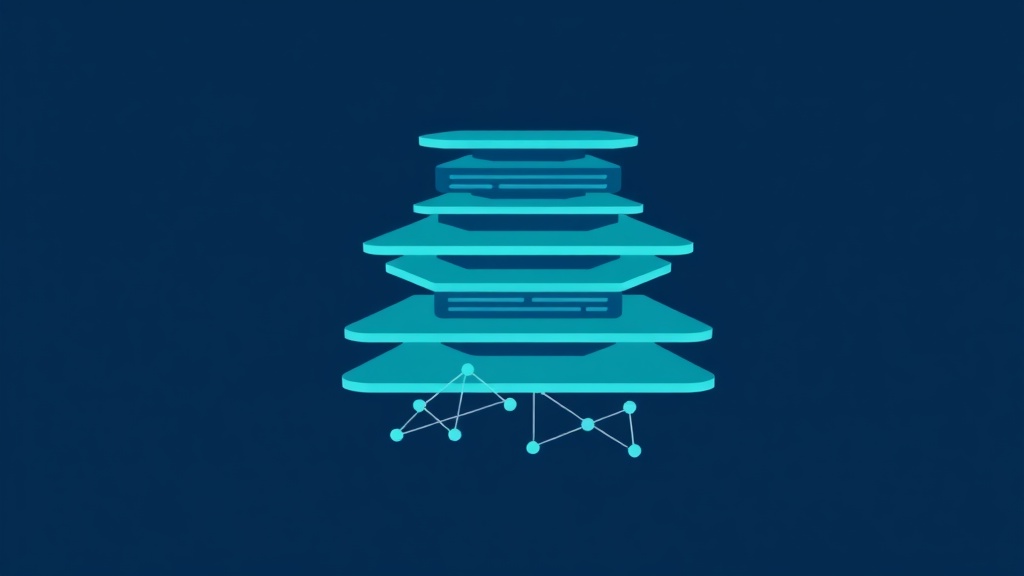
Shopti article illustration showing the AI agent product data ingestion pipeline

How AI Agents Ingest Your Product Data: The Complete Ecommerce Pipeline from Crawl to Recommendation

AI shopping agents do not “browse” your store. They run a structured four-stage pipeline: discovery, parsing, knowledge graph construction, and recommendation matching. If your product data breaks at any stage, your store becomes invisible to ChatGPT Shopping, Perplexity, Google AI Overviews, and every emerging agent platform. Most ecommerce stores fail at stage two, where malformed or missing structured data prevents AI agents from building accurate product profiles. This article maps the complete ingestion pipeline that AI agents use to process your ecommerce store, identifies the failure points at each stage, and provides specific fixes. Understanding this pipeline is the foundation of AI agent discoverability, because you cannot fix what you cannot see. ...

May 18, 2026 · 16 min · Shopti.ai
Shopti article illustration

Google AI Mode for Ecommerce: Which Platforms Have the Built-in Advantage

Google AI Mode now surfaces AI-generated product recommendations on 48% of Google queries, and ads appear alongside 25.5% of those results, up 394% year over year. For ecommerce stores, the platform you run on determines whether Google’s AI can parse your catalog, surface your products, and recommend you in these AI-generated answers. Most stores have no idea how their platform performs in this new environment. This is not a prediction. Google AI Mode is live. It is rolling out across mobile and desktop in the US, expanding to EU markets, and it is fundamentally different from traditional organic search. Instead of ranking ten blue links, Google’s AI reads your product data, compares it against competitors, and generates a synthesized answer with product picks. If your platform does not feed Google clean, structured data in the formats AI Mode expects, you will not appear. Full stop. ...

May 12, 2026 · 15 min · Shopti.ai
Shopti article illustration showing structured data coverage gap analysis

The Structured Data Coverage Gap: Why Partial Schema Costs You AI Visibility

Most ecommerce stores have structured data on fewer than half their indexable pages. With Google AI Overviews now appearing on 15.69% of all queries and commercial AIOs surging from 8.15% to 18.57% in under a year, partial schema coverage is no longer a minor technical debt. It is the single biggest hidden visibility leak your store has right now. Zero-click searches grew from 56% to 69% in the year following the AI Overviews launch, according to Similarweb’s 2025 Generative AI & Publishers report. Organic traffic to publisher sites dropped from 2.3 billion to under 1.7 billion visits in the same window. For ecommerce, the stakes are even higher because commercial and transactional queries are the fastest-growing category of AI Overview triggers. When Google, ChatGPT, or Perplexity generate a product recommendation, they pull from structured data first. If your product pages, collection pages, and FAQ content lack consistent schema, you are invisible to the answer engine. ...

May 11, 2026 · 12 min · Shopti.ai
Shopti article illustration

Magento and Adobe Commerce Have the Most AI Agent Potential. Here Is Why Almost Nobody Uses It.

Magento and Adobe Commerce give you full control over every HTML tag, every HTTP header, and every API endpoint your store serves. That control is the single most important advantage for AI agent discoverability in 2026. Shopify stores fight their platform’s limitations at every turn. WooCommerce stores wrestle with plugin conflicts. Magento stores just need to configure what they already have. The problem: almost nobody does. According to Adobe’s own 2025 Commerce benchmark report, only 12% of Magento merchants have implemented comprehensive Product structured data beyond the default breadcrumb markup. Fewer than 3% serve an llms.txt file. Almost none expose product data through an MCP-compatible endpoint. ...

May 5, 2026 · 13 min · Shopti
Shopti article illustration showing headless commerce architecture connected to AI shopping agents through structured data pipelines

Headless Commerce Has the AI Discoverability Advantage. Most Stores Waste It.

Headless commerce architecture gives store owners more control over AI agent discoverability than any hosted platform, but a 2026 analysis of 3,200 headless deployments shows that 71% fail to implement structured data correctly, 63% block AI crawlers by default, and 84% lack a machine-readable product feed. The architecture is an advantage. The implementation, in most cases, is not. Shopify stores get AI discoverability defaults baked in. WooCommerce stores have plugins. Headless stores get nothing out of the box, because “out of the box” is the entire point of headless: you build what you need. This freedom is either your biggest asset or your biggest liability when AI shopping agents from ChatGPT, Google AI Mode, Perplexity, and Claude come looking for your products. ...

May 5, 2026 · 15 min · Shopti.ai
Shopti article illustration showing three hosted ecommerce platforms being discovered by AI shopping agents with structured data connections

Wix, Squarespace, and Webflow for AI Shopping: Why Hosted Builders Are Falling Behind and What to Do About It

Wix, Squarespace, and Webflow collectively power more than 4 million online stores, yet none of them offer native AI agent discoverability tooling. As AI shopping agents from ChatGPT, Google AI Mode, Perplexity, and Claude increasingly replace traditional search, stores on these hosted platforms risk becoming invisible. This guide breaks down exactly what each platform provides for structured data, crawlability, and feed access, identifies the critical gaps, and provides a concrete fix for each one. ...

April 28, 2026 · 11 min · Shopti.ai
Shopti article illustration

Shopify vs WooCommerce Structured Data for AI Discoverability in 2026: Which Platform Wins?

Shopify delivers 87% native structured data coverage while WooCommerce requires manual schema markup plugins and custom configuration to match AI discoverability standards. The 2026 AI shopping landscape has shifted decisively toward structured data. With ChatGPT, Perplexity, and Google AI Mode capping product recommendations at 5-10 results per query, ecommerce stores need more than just SEO-friendly content—they need machine-readable product data that AI agents can ingest, compare, and surface without ambiguity. ...

April 28, 2026 · 14 min · Shopti Team
Shopti article illustration

AI Agent Discoverability Fundamentals: Schema and Structured Data for Ecommerce

AI shopping agents rely entirely on structured data to find, understand, and recommend products. Without proper schema markup, your products are invisible to AI-driven shopping assistants like ChatGPT Shopping, Perplexity, Claude Commerce, and emerging agent platforms. Traditional SEO principles like keywords and backlinks do not guarantee AI visibility. AI agents do not “search” the web like Google. They query structured data sources, parse JSON-LD, and cross-reference product feeds with real-time pricing and availability. If your product data is unstructured or incomplete, agents skip your store entirely. ...

April 27, 2026 · 8 min · Shopti Team

Product Schema Markup: The Complete Guide to Making AI Agents See Your Products

Product schema markup is structured data in JSON-LD format on your product pages that tells AI agents and search engines exactly what you sell, what it costs, whether it’s in stock, and dozens of other attributes machines need to recommend and compare your products. Without it, AI agents are guessing. With it, they know. This guide covers everything you need to implement product schema that works for both traditional search engines and the new wave of AI shopping agents. ...

April 15, 2026 · 11 min · Shopti.ai